Morgan Grove Nature Area’s First Prescribed Burn: A Milestone for Habitat Management
Morgan Grove Nature Area’s First Prescribed Burn: A Milestone for Habitat Management
Burn Unit 12
Written by: Paxton Caroline Hayes
Photos taken by: Paxton Caroline Hayes and Hana Sellers
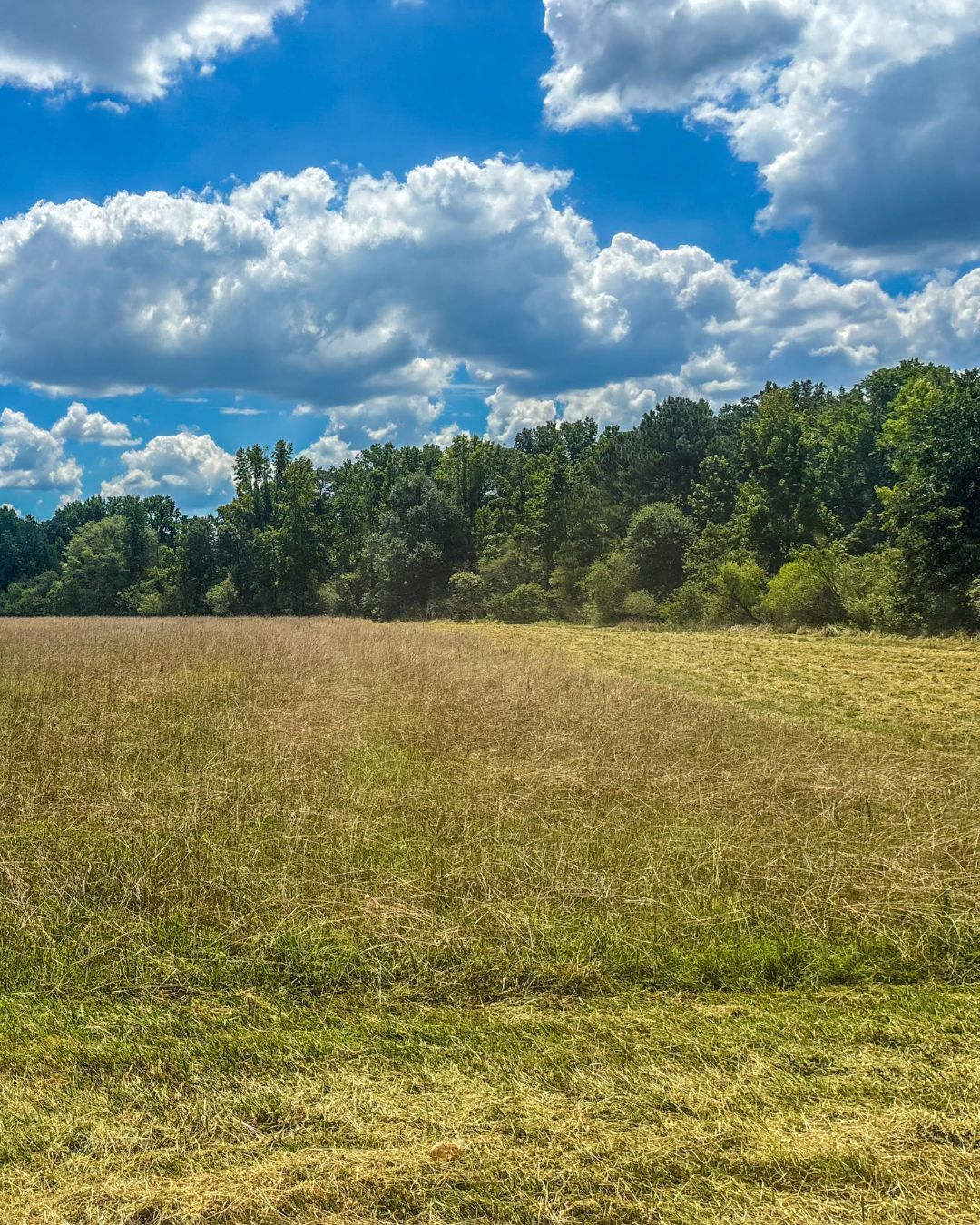
Location: Morgan Grove Nature Area, Fayette County, Georgia
If you have visited our Morgan Grove Nature Area since late April, you may have noticed a significant change in the landscape. Scorch marks on tree bark, patches of ash-covered vegetation, and areas of disturbed soil may seem surprising at first glance. These changes are the result of an exciting milestone for the property: Morgan Grove’s first prescribed burn.
While fire is often associated with destruction, prescribed fire is a carefully planned and scientifically supported land management tool. Conducted under specific weather conditions and with trained professionals on site, prescribed burns help maintain healthy ecosystems by reducing excess vegetation, recycling nutrients back into the soil, and creating conditions that support native plant and wildlife communities. The signs of fire currently visible across the site are a natural part of the process and are not harmful to the ecosystem or its wildlife. In fact, many native species found at the nature area depend on periodic fire to thrive!
From Theory to Practice
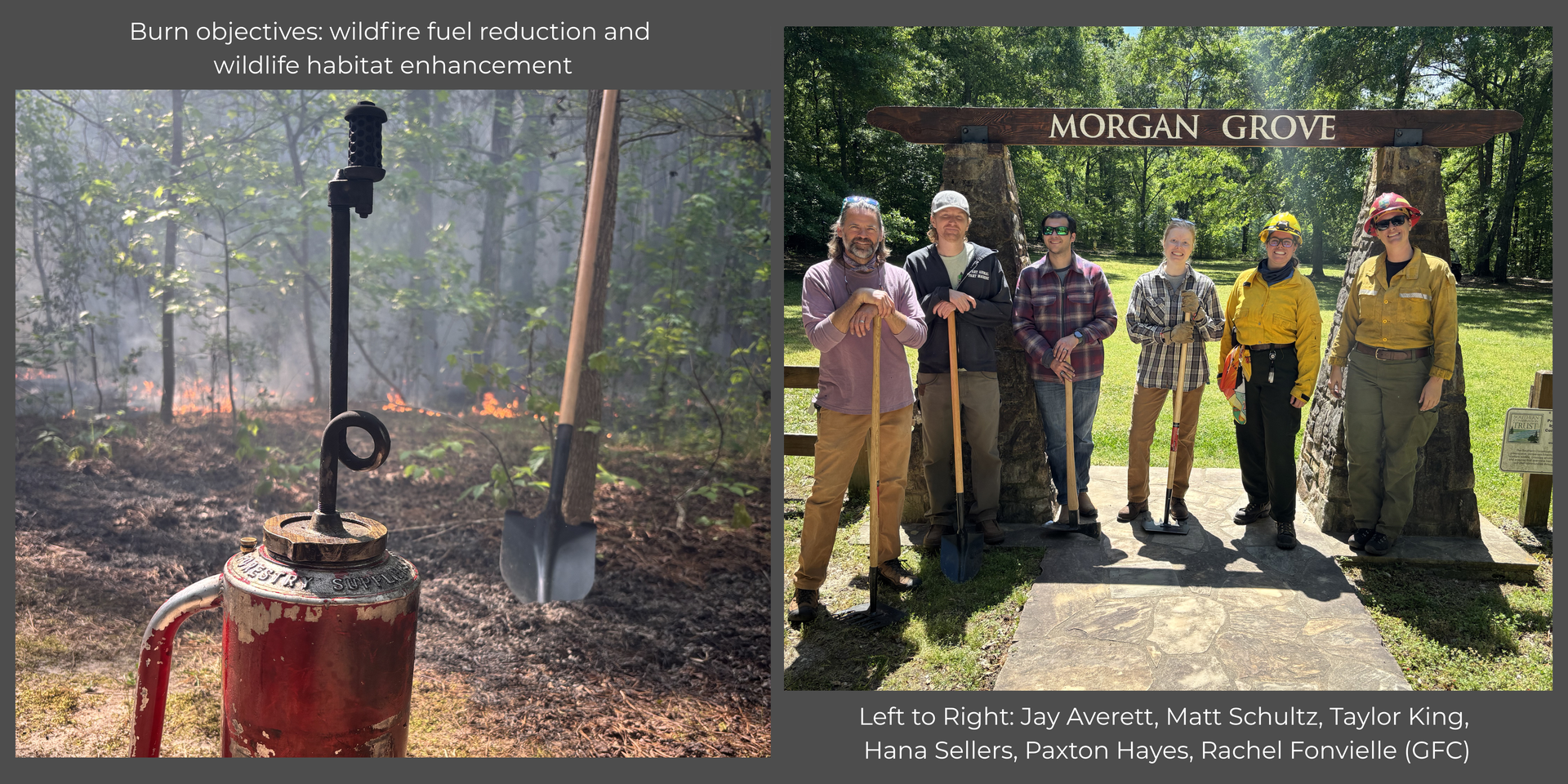
This burn was the result of months of preparation and collaboration. We worked closely with the Georgia Forestry Commission to develop a burn plan and prepare the site for implementation. Throughout this process, I was able to take what I have been learning over the past year and apply it to a property that I already help manage.
In the weeks leading up to the burn, SCT staff dedicated approximately 30 hours of on-the-ground work to ensure the property was ready for a well-controlled, habitat-enhancing prescribed fire. Preparation activities included clearing trails so they could function as firebreaks, removing hazardous debris, and raking around individual trees that required additional protection. These efforts helped create a safer environment for the burn team, the wildlife that live there, and the surrounding community.
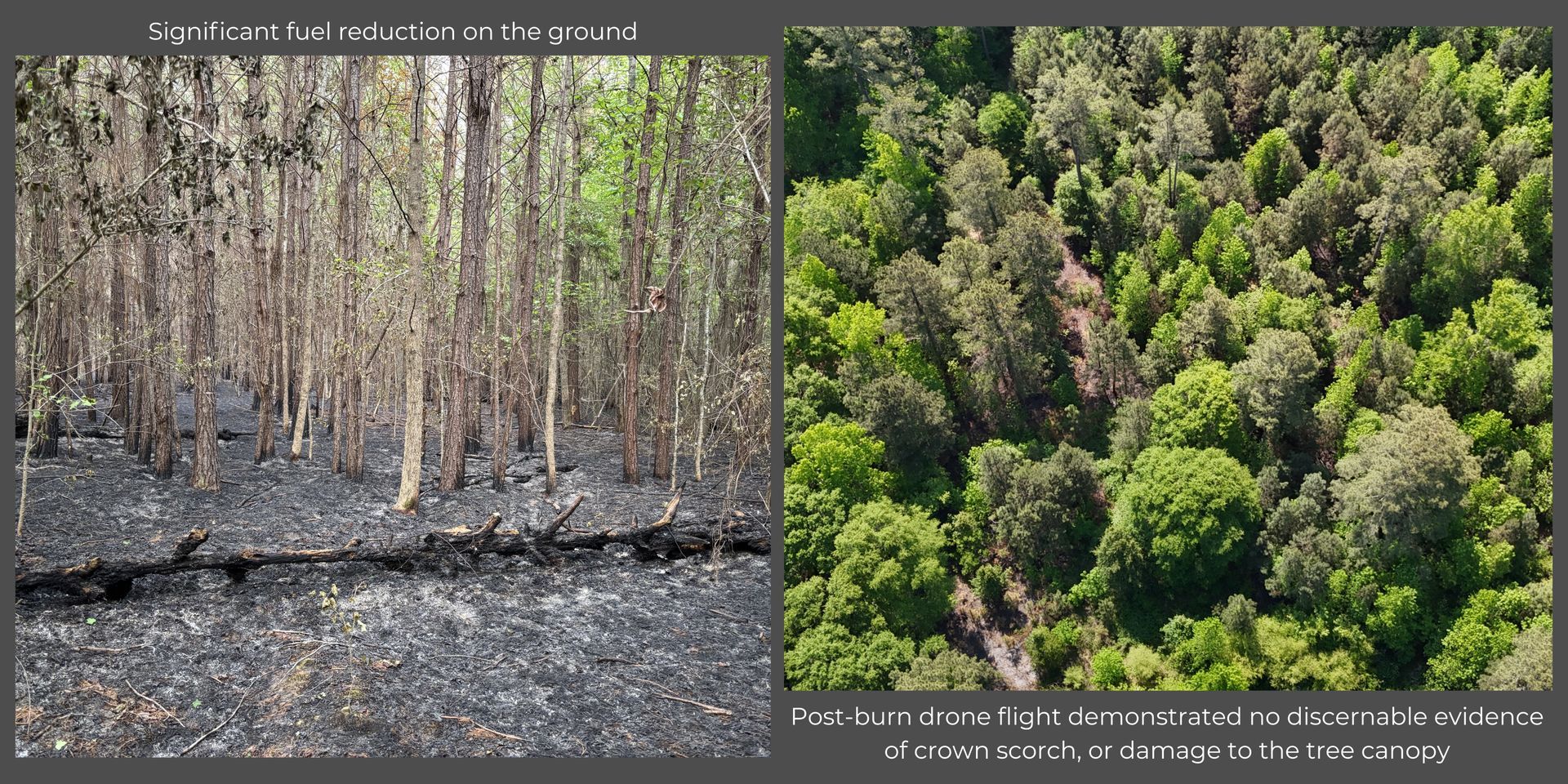
On the day of the burn, a small but highly coordinated team worked together to carefully carry out the operation. By monitoring weather patterns, fuel conditions, and site characteristics, we were able to mimic the natural role of fire in the landscape while minimizing risks. The result was a controlled, effective burn that met our management objectives and demonstrated the value of proactive habitat stewardship. This success is evident in the substantial reduction of surface fuels, with no discernible crown scorch in the tree canopy.
Kindling Future Success
Although the burn was a major success, every prescribed fire provides opportunities for learning and improvement. Understanding both local and regional weather patterns reinforced the importance of preparation and adaptability. At the time, Georgia was experiencing increasingly hazardous drought conditions that contributed to catastrophic wildfires in the southern part of the state the following week. While our region retains more moisture in its soils and vegetation, lower than average relative humidities and high wind-gusts across the state complicated our ignition and mop-up plans.
One of the most complex aspects of planning and executing this burn was the unique setting of the property itself. Morgan Grove Nature Area is a small, urban nature area surrounded by residential neighborhoods and located less than five miles from a downtown district. Managing fire in such a setting requires extensive planning, communication, and coordination. Smoke management, public awareness, safety considerations, and changing environmental conditions all played important roles in the decision-making process.
Burning For More?
If you are interested in learning more about prescribed fire and its role in ecosystem management, I encourage you to explore the other posts in this blog series. Each article covers a different aspect of fire ecology and includes resources for those who would like to learn more.
For readers interested in the details of Morgan Grove’s first prescribed burn, stay tuned for an in-depth report to be posted later this summer. The report will walk through the entire process, from site preparation, planning, ignition, monitoring, and mop-up, and provide a closer look at what it takes to safely and effectively use prescribed fire as a conservation tool.
Want to help protect the landscapes and natural resources that define our region for future generations? Become a member of the Southern Conservation Trust and support local land conservation, environmental education, and stewardship efforts across Georgia. Learn more and become a member today at
www.sctlandtrust.org/memberships.
Press & Media Inquiries
Contact Us
About Southern Conservation Trust
At Southern Conservation Trust, we are passionate about elevating nature through exceptional stewardship. Based in Georgia, our 501(c)(3) public charity has successfully conserved over 65,000 acres of land across the Southeast, including five public nature areas in Fayette County and the Fayette Environmental Education Center. We believe that protecting our natural spaces is just the beginning; everyone should have equal access to enjoy the beauty of the outdoors. Join us in our mission to foster a deeper connection between people and nature. Learn more at www.sctlandtrust.org.
Share Post
Recent Articles & Blogs