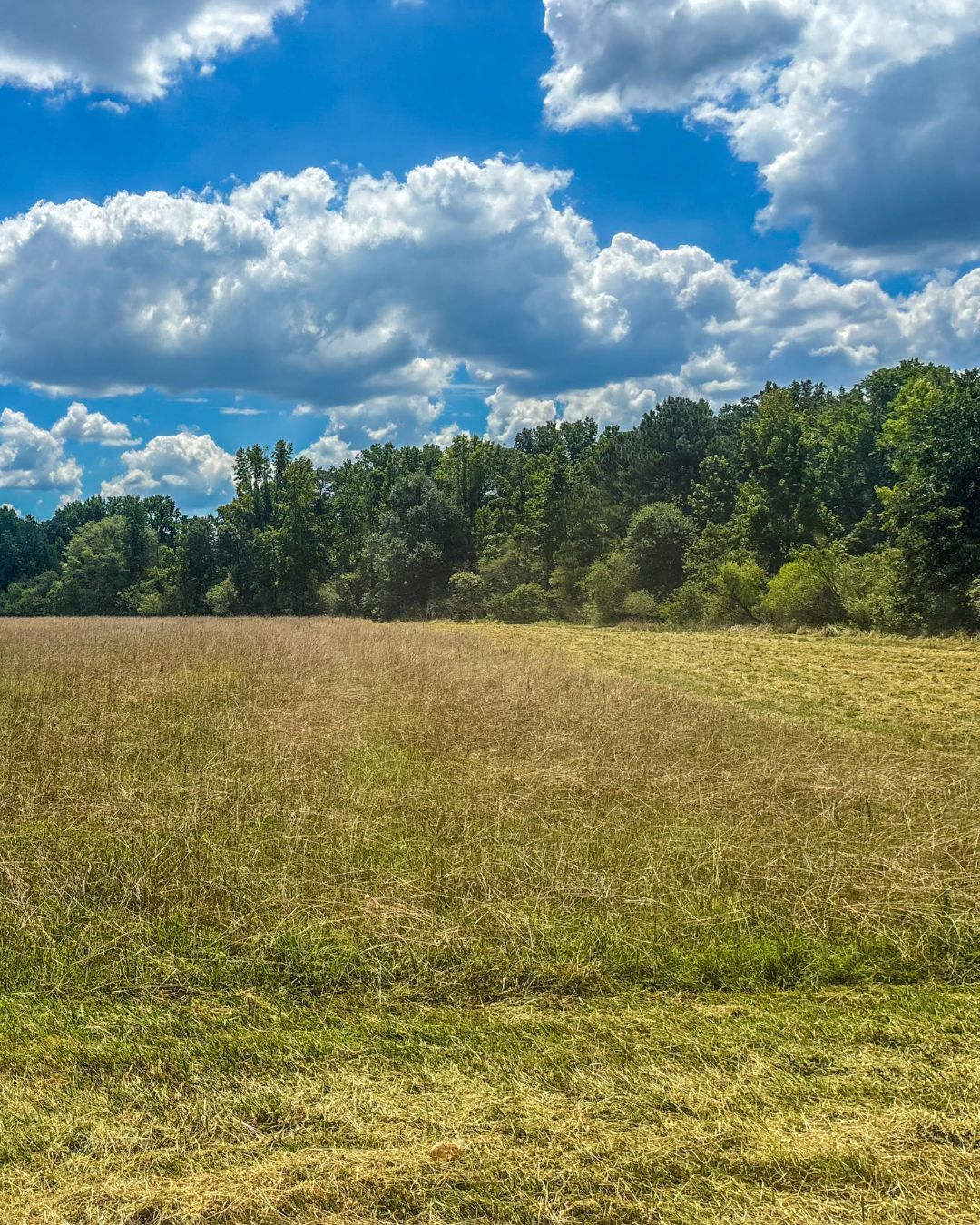

Discovering Longleaf Pines: A Conservation Success Story
The Southern Conservation Trust’s conservation team recently visited a conserved property in Aiken County, SC, where they observed naturally seeded longleaf pines! Longleaf pines have the longest leaves of any eastern pine species, growing up to 18 inches. They are also the longest-lived of all eastern pine species and can live to be 250 years old, and sometimes older! These amazing trees are found mainly in sandy dry soil, although their historical range covers many different types of ecosystems. The longleaf pine forest contains a variety of rare plant species, including carnivorous plants such as Venus flytraps and pitcher plants.
Historically, longleaf pine forests experienced frequent, low-intensity fires from lightning strikes. This ecosystem relies on fire to reduce the buildup of pine needles and other leaf litter, allowing longleaf pine seeds to access the soil and germinate. Fire helps recycle nutrients back into the soil, decreases competition from non-native plants and hardwood trees, aids in the restoration of grassy ground cover, controls the spread of pests and invasive species, and decreases the risk of extreme wildfires. Native grasses and herbaceous plants fuel the fire as it moves through the landscape, and once they regenerate, they provide nutrient-rich food and cover for wildlife. Prescribed fires, or prescribed burns, refer to the use of controlled fires monitored by experts to improve ecosystem health. Prescribed burns are an essential management practice when working in longleaf pine forests.
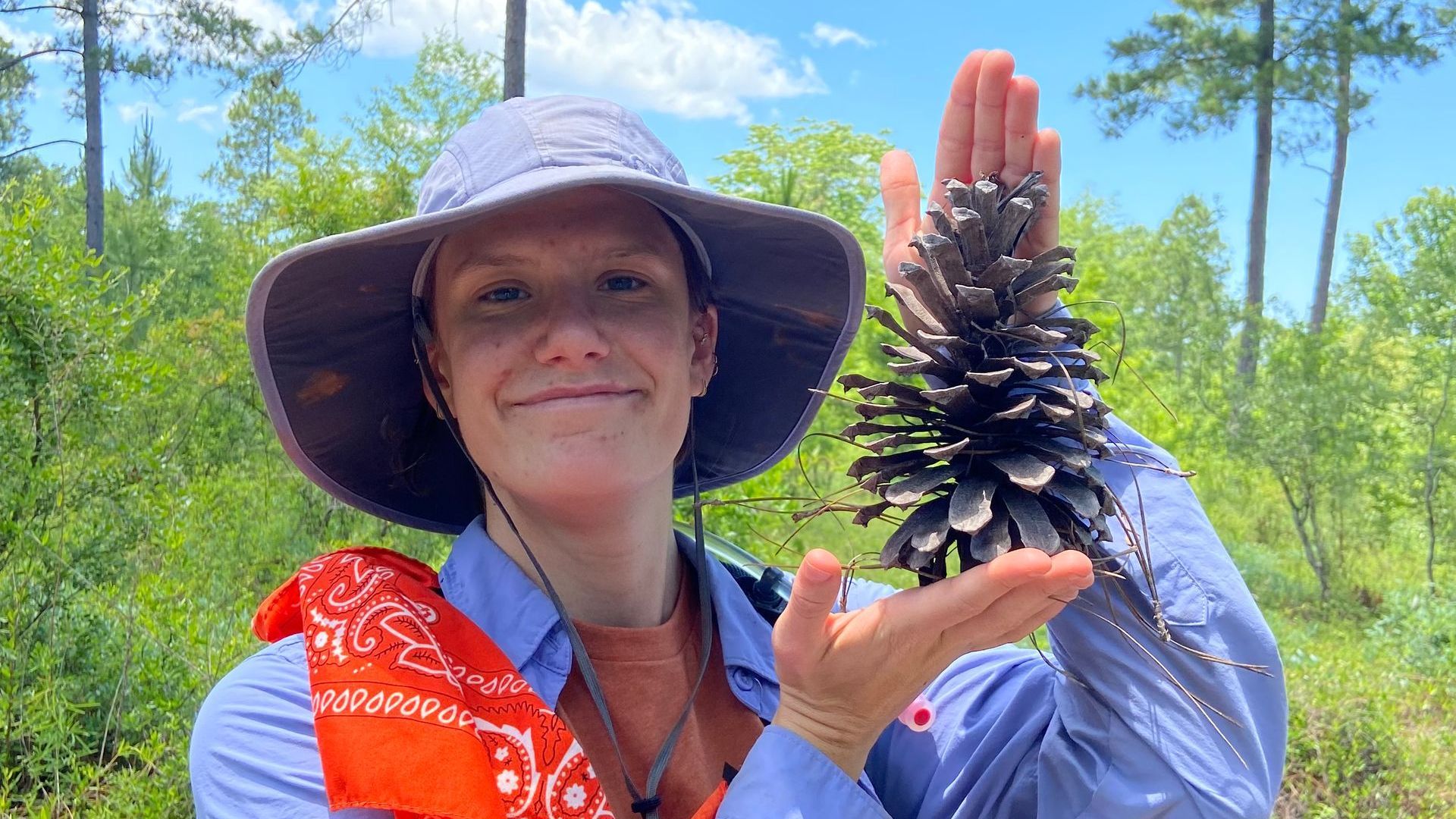
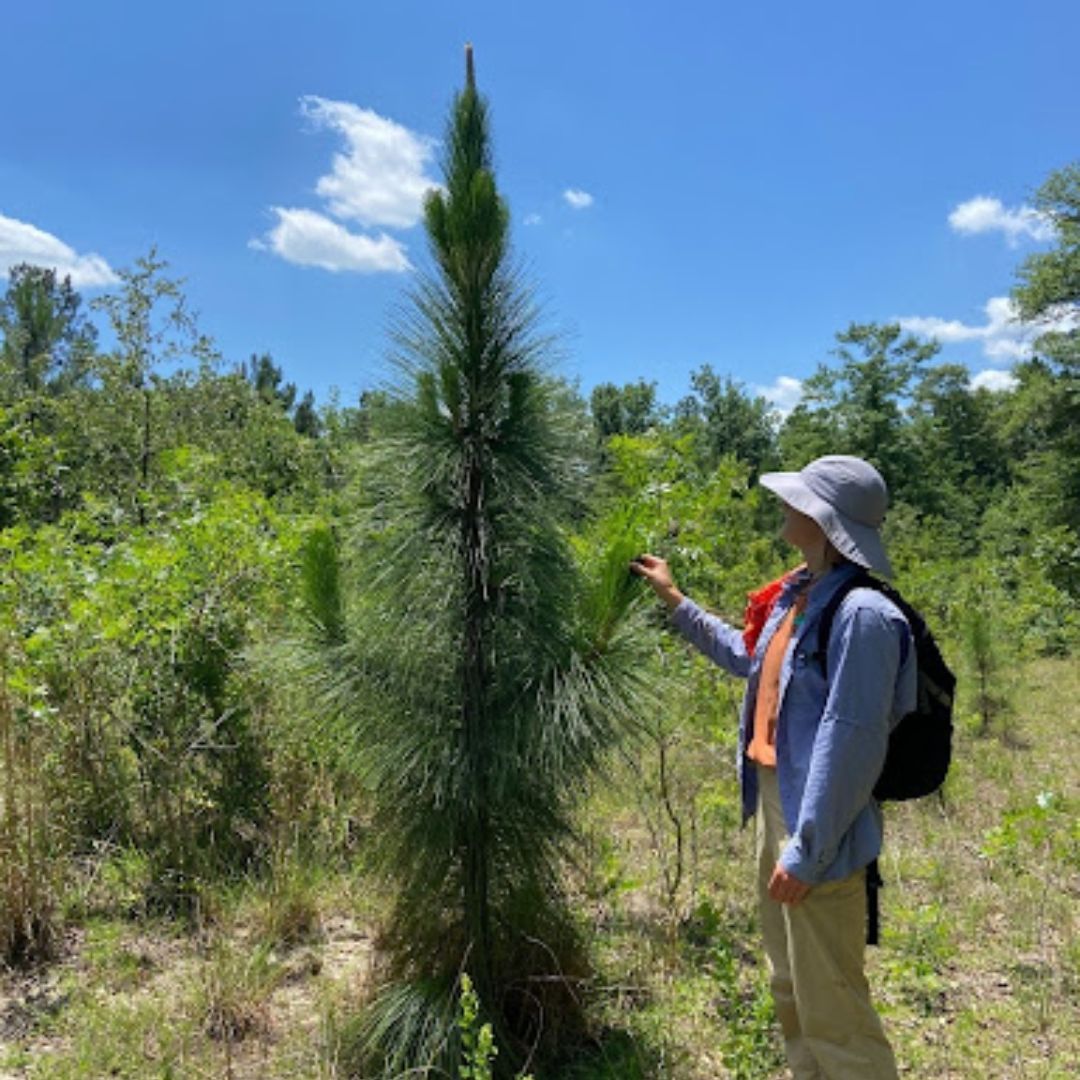
During our visit, we were fortunate to see longleaf pines in two different stages of their life cycle. While in the "grass stage," the tree puts most of its energy into expanding the root system underground. A clump of needles surrounds the silvery bud to protect it from fire. Next, the tree enters the "bottlebrush stage" (not pictured). The tree will begin to grow in height during this stage but will not put out any horizontal branches. After reaching 6-10 feet in height, longleaf enters the "sapling stage." Our Stewardship Associate, Rita, is seen standing next to a tree in the “sapling stage.” During this time, the tree begins to grow lateral branches and almost resembles a candelabra! Following the sapling stage, the trees will reach maturity.
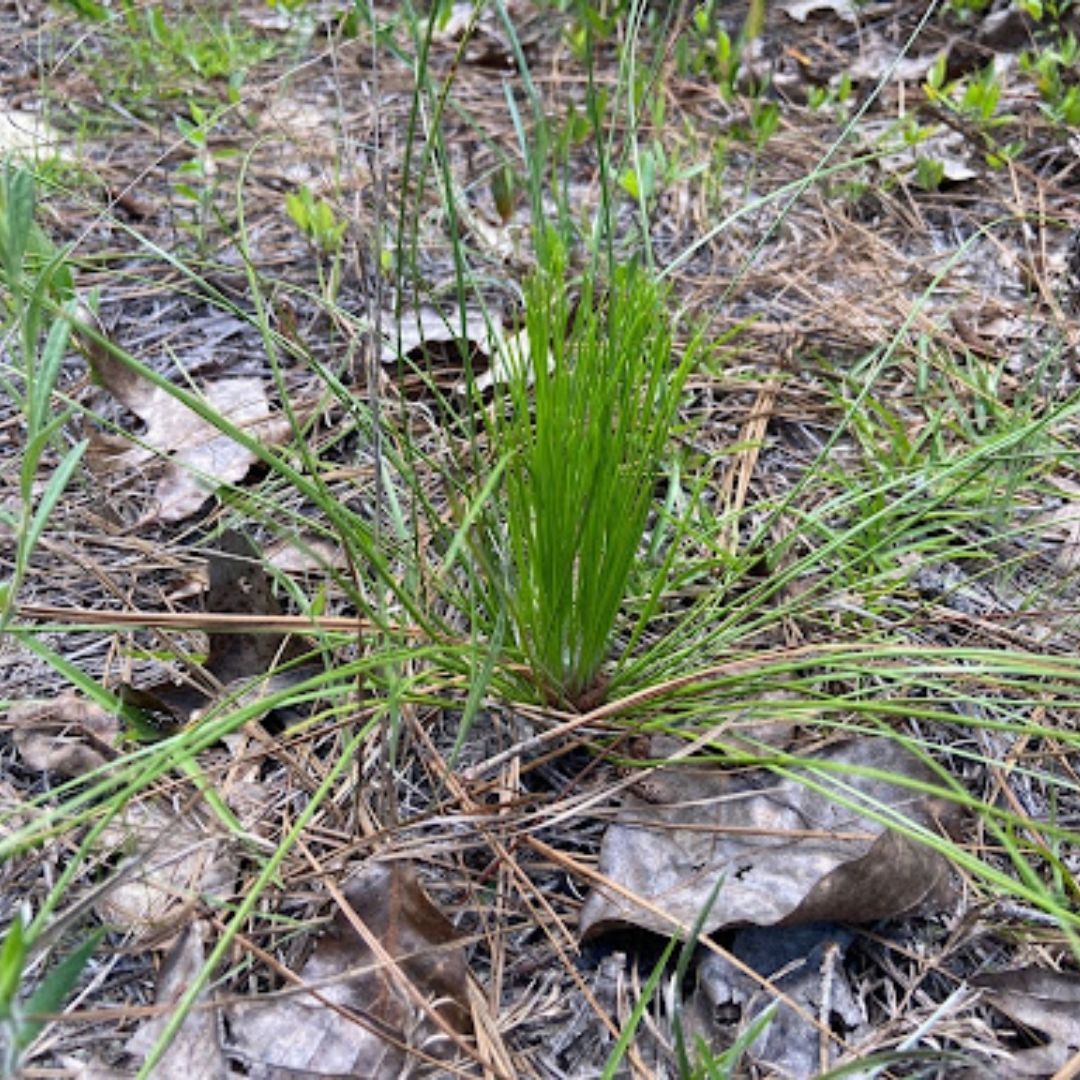
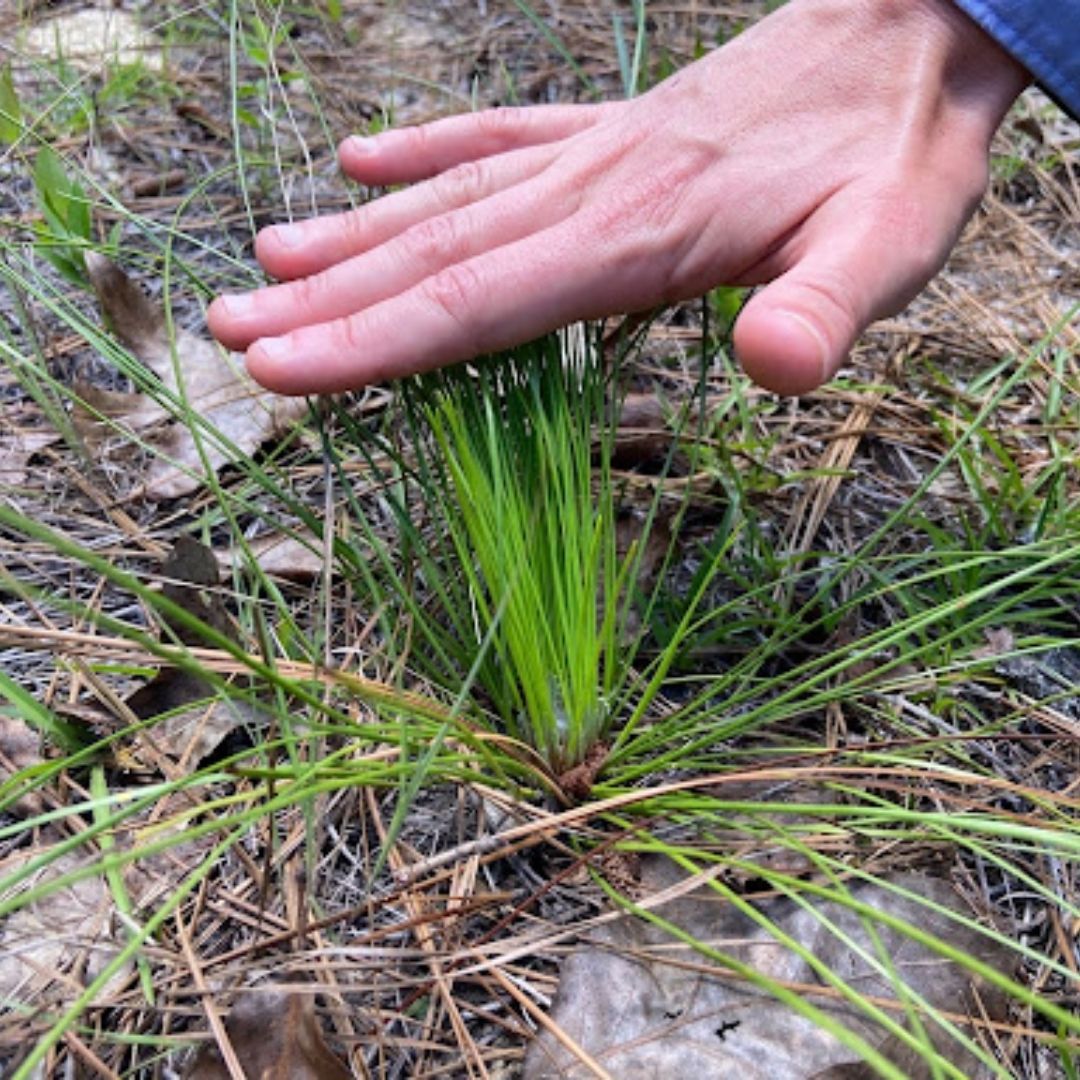
Unfortunately, longleaf pines occupy less than 5% of their historical range due to threats such as development and fire suppression. Longleaf pine forests play a crucial role in supporting many wildlife species, including the endangered Red-cockaded Woodpecker. SCT proudly owns and manages Nicks Creek Longleaf Reserve in Moore County, NC. After only a few years of management, we recently received the exciting news from our property manager, Melvin Ezzell, that Red-cockaded Woodpeckers have nested and hatched a family on Nicks Creek! This achievement stands as a testament to Melvin's hard work and the success of prescribed burns and intentional management of the longleaf pine ecosystem. Read more about Phoenix's story here.
References
Press & Media Inquiries
Contact Us
About Southern Conservation Trust
At Southern Conservation Trust, we are passionate about elevating nature through exceptional stewardship. Based in Georgia, our 501(c)(3) public charity has successfully conserved over 65,000 acres of land across the Southeast, including five public nature areas in Fayette County and the Fayette Environmental Education Center. We believe that protecting our natural spaces is just the beginning; everyone should have equal access to enjoy the beauty of the outdoors. Join us in our mission to foster a deeper connection between people and nature. Learn more at www.sctlandtrust.org.
Share Post
Recent Articles & Blogs